| The BARPS® Method of Asana |
The BARPS® method of Asana is devised by Navtej Johar, a long time practitioner in the Krishnamacharya yoga tradition, as well as a Bharatanatyam dancer.
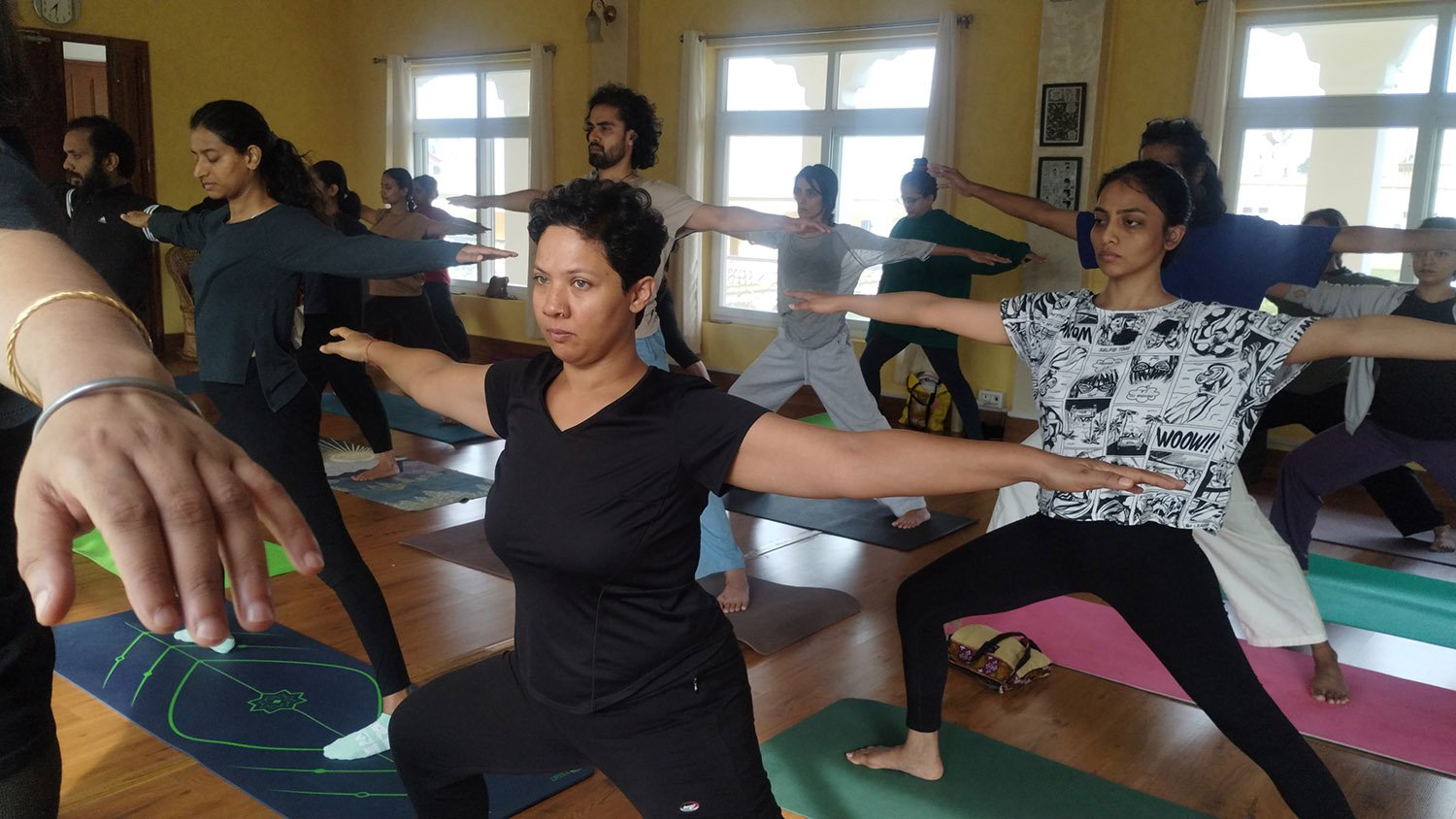
This method of asana involves the progressive application of five fundamental principles, namely, mindful bracing of the body against the floor; finely calibrated alignment of limbs plus rotation of joints relative to the manner in which the body is braced against the surface. Having secured physical ease in asana through the observation of these three principles, the method then proceeds to facilitate poise in breath, and subsequently attention, in order to foster a satisfying and spacious embodiment of the asana with clarity. These five principles, namely bracing, alignment, rotation, poise and satisfying-spaciousness constitute the acronym BARPS and serve as a tool to effectively self-regulate asana practice.
Speech is integral to the practice of BARPS as this method views the body not alone as a material body—made up of bones, muscles, fluids, organs, breath, intelligence etc, but equally made up of words
|
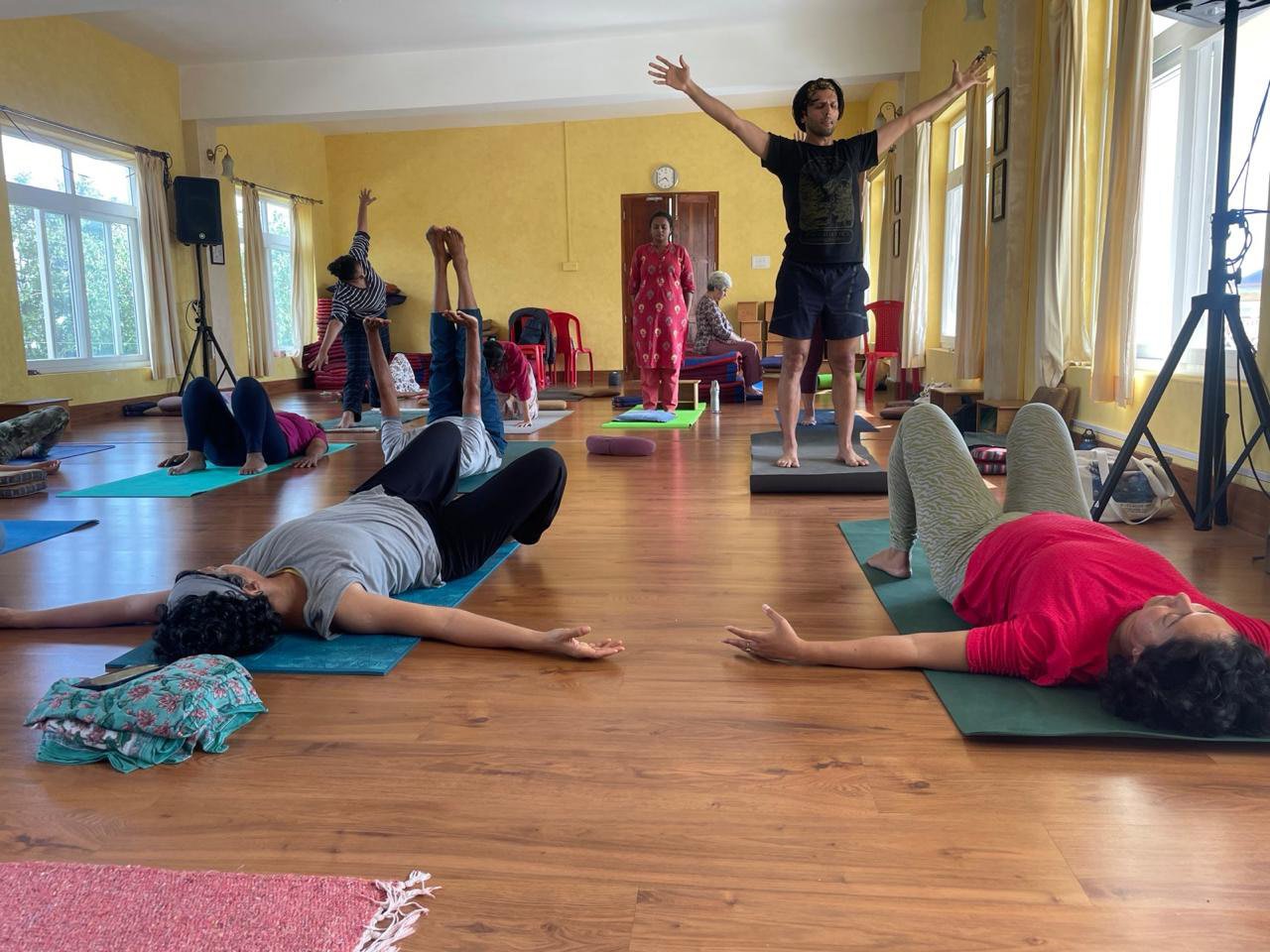 |
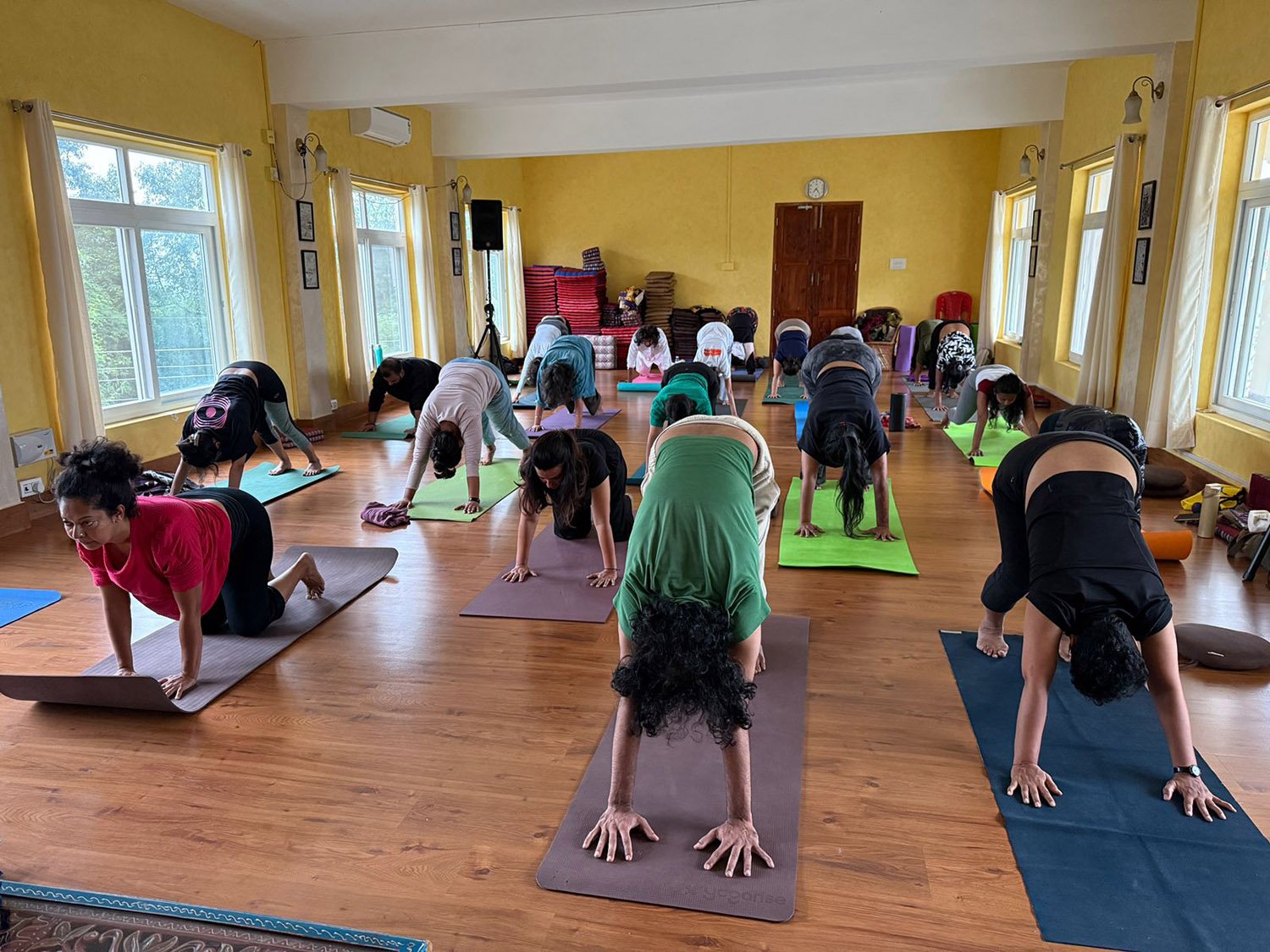
Speech is integral to the practice of BARPS as this method views the body not alone as a material body—made up of bones, muscles, fluids, organs, breath, intelligence etc, but equally made up of words. The sensation of each word and image that exists in the external universe is also seeded in the body, thus the body is seen as reflexively “alive” in its responsiveness to the word-image. The keywords methodology is used to suggestively inspire embedded possibilities in the body which may have been either undermined or even disallowed by popular norm or ideal.
|
   
 |
Why BARPS?
The purpose of BARPS is to effectively unburden the body from the normative “ideas” of the body, i.e., moralistic, capitalist, nationalist and even cosmetic; because each of these ideas are constructs and for the most part are categorically dismissive and controlling of the body. For BARPS, the sensorial body is source—and that too a revelatory one, and not resource, or worse still, an instrument in the service of an ideal. It is therefore a means to preserve the body from such impinging ideas and restore it to its innate intelligence and sensitivity with equanimous authority.
The BARPS Method is firmly rooted in theory. It adheres primarily to the philosophy of Samkhya and then follows various streams of teaching which are further spawned out of this philosophy, namely, |
the Yoga Sutras of Patanjali, Abhinavagupta’s Pramarthsara—that builds on the Samkhya model to create a base for Trika philosophy, and Svatmarama’s Hatha Pradipika.
The repertoire of keywords is fluid and ever expanding, some new words which have been included over time are appetite, availability, awe, adhikaar (autonomy), awareness, buoyancy, beparvahi (care-freeness), rest, respite, pause, permission, precarity, pukaar (inner call), safety, sukha (pleasurable repose) and so on.
|
The Various Components of the One Year TTC in BARPS
Practice: The practice component will be designed to first build the foundation for immersion in the practice, and then proceed to unfold the conceptual frameworks that serve as the underpinnings of this practice.
Weekly Online Practice: Navtej Johar will lead two weekly sessions in the BARPS method each week; participants will be required to attend both or at least one of these weekly sessions. The first module will also include one weekly session, “Introduction to the BARPS Method of Asana”, led by the Team in which the participants will be familiarized with the key concepts of Keywords based practice. This session will be mandatory for all to attend.
Weekend Workshop: Each module will include one online weekend-workshop that will elaborate on principles and methodologies underlying the designing and sequencing of the BARPS practice.
Biyearly Offline Retreat: Twice through the course of the one year program, participants will be required to meet in person for a weeklong retreat focused on teaching tools and hands-on practice of the BARPS method. The venue of the retreat will be shared in advance; the summer retreat will be in the hills of Kangra, HP, while in the winter we will meet in the planes of Northern India.
Theory: The theory component will focus on texts and critical discourses that have informed the BARPS Methodology.
Module 1: Samkhyakarika, by Iswara Krishna, a 4th century text.
This course will be co-taught by Pandit Rishiraj Pathak and Navtej Johar. The philosophy of Samkhya is the foundation of Patanjali Yoga and thus critical to its understanding. In this module, we will read the Sanskrit text, verse-by-verse, and then elaborate on it to build a detailed framework of this materialist philosophy that is singularly focused on mindful-embodiment. No prior knowledge in Sanskrit is required to join. |
|
Module 2: Parmarthsara, by Abhinavagupta, a 10th century Kashmir Shaiva (Trika) text
The Parmarthasara, authored by Abhinavagupta, further elaborates on the Samkhya model from a Kashmir Shaiva or Tantra perspective that by default renders the body both imaginative and poetic. This text is important to the keywords methodology of BARPS.
Module 3: Patanjali’s Yoga Sutras & the Hatha Yoga Pradipika by Swami Svatmarama.
The two texts studied in detail over the first two modules both respectively offer the theoretical basis for the practice of Yoga, as delineated in the Yoga Sutras by Patanjali, and that of Hatha Yoga, the rules of which are laid down in the Hatha Pradipika jointly, these two texts are important to understand both the energetic and physical particularities of asana practice.
Module 4: Modern Yoga
This last module will comprise of readings by a number of modern scholars and practitioners devoted to Yoga Studies. These readings will be curated to identify and acknowledge the shifts in perspective that caused us to view and present both the body as well as our embodied traditions within the modern body-dismissive frameworks introduced to us by the colonizer. |
Evaluation:
- Class participation (Attendance)
- Journaling and weekly reflections
- Mid-term paper – Short essay
- End-term – Research paper based on reflections
- Designing and facilitation of one sequence in the BARPS method
Requirements:
The BARPS Method of Asana TTC is open to all participants who have prior experience in some yoga asana practice, be it in any tradition. The course will involve rigorous engagement with texts, so will require an inclination towards theory. The sessions will primarily be led in English. Though all the listed texts are in Sanskrit, participants are not required to be familiar with Sanskrit.
|
 |
Fee Breakup
BARPS Method of Asana — Teacher Training Course
| Description |
INR |
USD |
| Total fee for TTC in the BARPS Method of Asana |
₹220,000 |
$3,500 |
| Registration fee |
₹36,000 |
$450 |
| Module 1 |
₹38,000 |
$425 |
| Module 2 (with seven days retreat) |
₹54,000 |
$600 |
| Module 3 |
₹38,000 |
$425 |
| Module 4 (with seven day retreat) |
₹54,000 |
$600 |
| 5% discount if total fee is paid at beginning of course |
₹11,000 |
$150 |
| Monthly fee for those who don't wish to pay quarterly |
₹17,000 |
$190 |
|
|

|
|

